Begin with a suitable operating area
Food and beverage facilities coordinate raw materials, packaging, work-in-progress and finished goods across production and warehouse areas. AMRs can be evaluated for selected repetitive movements when the site, load, route, environmental conditions and operating procedures are suitable.
The first step is to identify a stable movement outside any area or process that requires equipment characteristics the proposed AMR cannot meet.
Potential F&B material-flow use cases
- Pallet movement between dry storage, staging and production-support areas
- Packaging-material replenishment to defined delivery locations
- Finished-goods transfer between production exit and warehouse staging
- Return of empty pallets, containers or approved load carriers
- Movement between receiving, inspection, storage and controlled process-support zones
- Repetitive warehouse routes during defined operating windows
These are application possibilities, not claims of completed WFC customer deployments. Site and process owners must verify every workflow.
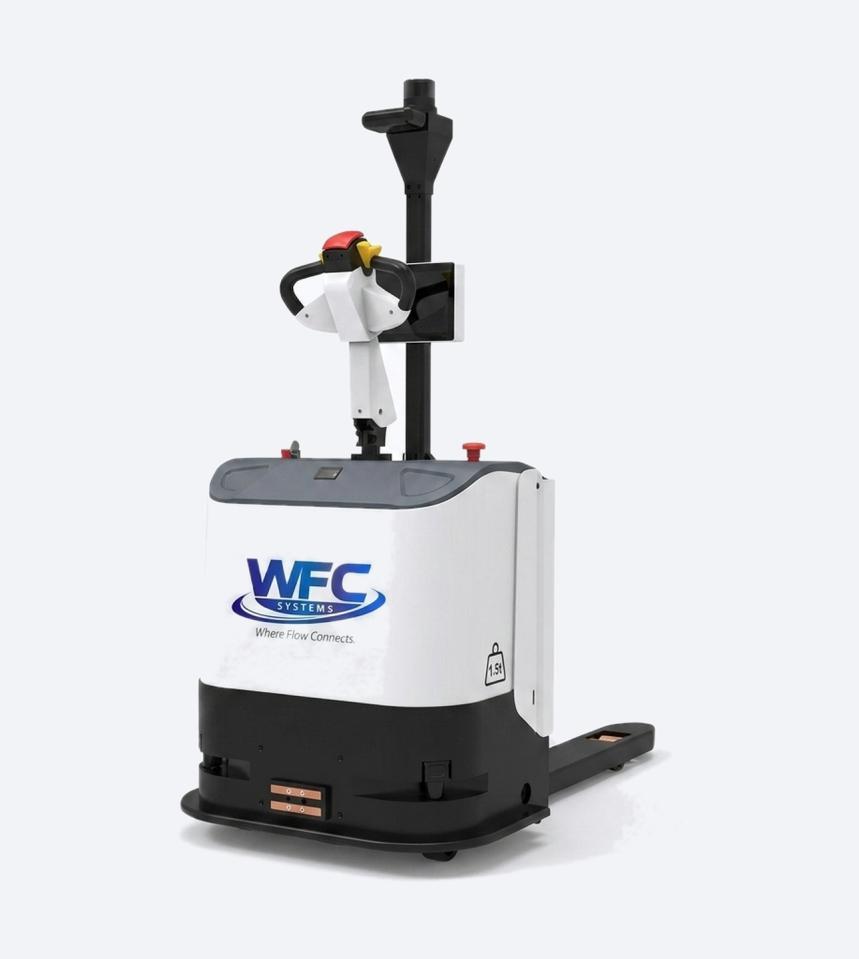
Environmental suitability comes first
Review floor cleanliness, dust, moisture, washdown practices, drainage, temperature, condensation, corrosive exposure and restricted hygiene zones. The equipment's environmental rating and material suitability must match the actual operating area.
Do not assume a standard warehouse AMR is suitable for wet, washdown, cold-room, hazardous or direct food-contact environments. Those conditions require explicit equipment and supplier verification.
Confirm the load and handling interface
Document the pallet, container or carrier; maximum weight; dimensions; fork-entry direction; stability; pickup and delivery heights; wrapping or securing method; and required placement tolerance. Damaged pallets, loose packaging or unstable loads can affect handling suitability.
Separate material flow from contamination risks
Map raw-material, allergen, packaging, waste, finished-goods and personnel flows. Identify whether the proposed route crosses areas with different hygiene or contamination-control requirements. Facility procedures and food-safety responsibilities remain with the relevant site owners and specialists.
WFC does not claim food-grade, hygienic-design or regulatory compliance for an AMR unless the selected product and project documentation explicitly support it.
Measure routes under normal production conditions
Assess usable aisle width, turns, doorways, crossings, staging areas, floor joints and temporary storage with the intended load included. Observe cleaning periods, shift changes, forklift traffic, pedestrians and peak production activity.
Review interfaces and system requirements
Identify interactions with racks, doors, shutters, conveyors, machines, warehouse locations or manual operators. Document any WMS, ERP or production-system requirements before confirming scope. Supported systems and protocols must be verified for the selected solution.
Stronger project-readiness signals
- A repetitive movement with defined pickup and delivery points
- A clean, organized and environmentally suitable operating area
- Stable loads, pallets and handling interfaces
- Adequate route width and controlled staging locations
- Clear separation of relevant hygiene or material-flow zones
- An operational owner and decision-maker
- A realistic pilot, budget and acceptance process
Use a controlled pilot
A pilot should define the approved route, load, operating window, cleaning responsibilities, user procedures and measurable acceptance criteria. Test realistic normal conditions and approved exceptions without making unsupported throughput, uptime or return-on-investment promises.
A practical next step
WFC Systems can begin with an application discussion covering the material, load, route, environment, cleaning conditions, traffic, lift requirement and intended operating schedule. Opportunities should progress only when the selected equipment and facility conditions are compatible.
Use the site-readiness guide →
Compare pallet jack and reach truck AMRs →
Plan a credible AMR pilot →